What has been proven about the benefits in clinical research. No exaggeration.
The dark side
What has been proven about the harms. No sugar-coating. Important: statistics do not distinguish natural weed from black-market weed treated with chemicals — some of the harm may come from it.
250+
Only official and scientific sourcesEverything on this site comes from open official data: the WHO, the UN, the European drugs agency, academies of sciences, ministries, and the journals The Lancet, JAMA, NEJM and BMJ. Every number has a link to its source: click it and check for yourself.
14,000*cannabis — 30 times fewer than from opioids. From a weed overdose — practically no one[WHO]
* The statistics do not distinguish natural weed from chemicals. Some of these deaths may be caused by synthetic cannabinoids: they are sprayed on cheap hemp and sold as ordinary weed. Read more →
Conclusion: decisions should be made on data, not fear. Below is everything in order, with links to the research.
A discovery few people know about
Cannabis is already inside us
Every human body has its own endocannabinoid system: its own substances similar to those in cannabis, and receptors that take them up. It helps control pain, appetite, sleep, mood, memory and immunity. THC from cannabis acts through those very same receptors.
CB1 receptorsMemoryPainMoodAppetiteSleep
Illustration
The brain has more CB1 cannabinoid receptors than almost any other receptor of this type. They are found where memory, pain, mood, appetite and sleep are born.
1964Raphael Mechoulam in Israel isolates THC for the first time — the main active substance of cannabis.
1988Allyn Howlett and William Devane find the CB1 receptor in the brain. Later it turns out the brain has more of these receptors than almost any other of this type.
1992Mechoulam, Devane and Hanuš find the first “cannabis” the brain makes itself. They call it anandamide — from the Sanskrit “ananda”, bliss.
1993A second receptor, CB2, is found — it works in the immune system throughout the body.
1995A second cannabinoid made by the body is found — 2-AG.
Illustration
Why this mattersThe system was named after cannabis because it was discovered by studying the plant. So cannabis is not a “foreign poison”: it works through a system each of us has from birth.
Why people don’t die from weedThe brainstem, which controls breathing and heartbeat, has very few cannabinoid receptors. That is why a fatal weed overdose has practically never been described — unlike opioids, which stop breathing.
In the discoverer’s wordsMechoulam: the body’s own cannabinoids help it withstand all kinds of damage and take part in regulating dopamine, serotonin and other brain chemicals.
1961The UN puts cannabis in Schedule IV — the most dangerous substances with “almost no medical value”. Next to heroin. There was no WHO scientific review at the time.
→
2020After the first-ever WHO scientific review (2018), experts write: cannabis does not belong in Schedule IV. On 2 December the UN votes — 27 “for”, 25 “against”. The USA and EU countries — “for”, Russia and China — “against”.
For 59 years cannabis stood next to heroin — without a scientific review. Now the UN officially recognises its medical value.
To be honest: cannabis still remains in Schedule I — under strict international control. The next step is up to individual countries.
Cannabis is neither a miracle cure nor a “road to heroin”. We have gathered clinical trials, meta-analyses and official statistics, and put the benefits and harms on the scales. Decide for yourself.
What we count as provenClinical trials, meta-analyses, Cochrane and national academy of sciences reviews, official statistics.
How we mark strengthstrongmoderateweak — by the quality of the research.
MediaMedia · not verified We only show news with this label and never as proof.
What is already allowedGrowing industrial hemp in an open field.[1] No law restricts processing the plant after harvest: fibre, oil, seeds, flour, feed, building materials.[2] Seeds and products made from them are allowed in food.[3] The EU has set maximum limits for THC in seeds and seed products.[4] Pure CBD has been removed from Latvia’s list of controlled substances.[5]
What is not yet allowedGrowing in a greenhouse or under plastic.[1] Using the flowers in food and teas.[2] Cannabis itself (marijuana) and THC in any amount are on the list of controlled substances.[3][4]
What changed?Nothing bad. Industrial hemp crops in Latvia grew from 400 hectares in 2016 to 1,000 hectares a year later — and the country did not collapse.[LV portāls]
Hemp is already sold in Latvia — officially, online and in shops
Hemp seeds, seed oil, flour, hulled seeds — in ordinary and online shops.[example: seeds] This is allowed: these products have a recognised history of safe consumption in the EU.[official answer]
Latvian hemp farms sell their products through online shops, at fairs and right on the farm, where they run tours.[HempToday][LSM]
Pure CBD as a substance is not controlled in Latvia,[official answer] and CBD cosmetics are sold under EU cosmetics rules.[overview]
CBD flowers are a grey zone. In Riga, even in the Old Town, shops openly sell CBD flowers with 0.2–0.3% THC, as allowed for industrial hemp in the EU. But Latvian law has no THC threshold specifically for flowers. In 2026 the Food and Veterinary Service replied that flowers of industrial hemp are assessed under the drug rules — though it noted itself that the answer is for information only and not binding on a court.[FVS, 2026] In practice it goes like this: the police detain the seller, seize the goods and send them for lab analysis. Selling drugs is a serious crime, and by law a person can be held in custody for up to 12 months, or up to 18 with a court extension.[Criminal Procedure Law, art. 277] The seized goods stay with the police until the court decides.[State Police] And forensic tests in Latvia take a long time: according to LTV, for some tests a wait of up to a year is considered normal.[LSM, De facto] If the analysis later shows THC below the threshold, the case is closed and the goods are returned. But no one gives back the months in custody, the lost business and the nerves. All because of an unclear law. Food and sweets with CBD are an unauthorised “novel food”.[FVS, 2026] Semi-synthetic H4CBD is banned.[official answer, 2025] That is exactly why we need a clear law: today even sellers are confused about what is allowed and what is not.
The plant is already here. We simply aren’t using its potential. The next step is medicine on prescription, then a regulated market with taxes, like alcohol and cigarettes.
The legendary “father of Chinese medicine” is credited with the first description of hemp as a medicine. The treatise “Shennong Bencao Jing”, written down around the 1st century, lists it among medicinal herbs and warns: take too much and a person “sees demons”.Nature, 2015 · Zuardi, Rev Bras Psiquiatr, 2006
2nd millennium BC
India: the Vedas and Ayurveda
In the Atharvaveda hemp is one of the sacred herbs. For centuries Ayurveda used it for pain, insomnia and appetite.Zuardi, 2006
Millennia
A sacred plant
In the Atharvaveda hemp is one of the five sacred herbs. In Hinduism it is linked with Shiva, the “Lord of Bhang”: the bhang drink is taken at the Holi and Shivaratri festivals. Taoist texts mention it in rituals, for the Scythians it was part of ritual, for Sufis part of practice. Today Rastafarianism considers it a sacred herb for meditation.for referenceReligionFacts · “Shiva, Lord of Bhang” · Cannabis and religion
5th century BC
The Scythians in Herodotus
The Greek historian described how the Scythians threw hemp seeds onto red-hot stones in a tent, inhaled the smoke and howled with pleasure.Nature, 2015
~2,500 years ago
The Pamirs: the first evidence
Traces of high-THC cannabis were found in braziers from burials — the earliest direct proof of its “smoked” use.Ren et al., Science Advances, 2019
Hemp is an ancient Latvian crop: fibre, oil and kaņepju sviests — hemp spread for bread, a traditional food at Līgo.for referenceLatvian Heritage / Celotajs.lv
1839
Western medicine
The Irish physician O’Shaughnessy tested hemp on animals and patients in India and brought it into European medicine. In the 19th century hemp tinctures were sold in pharmacies.Nature, 2015
1961
The ban
The UN Single Convention on Narcotic Drugs placed cannabis in the strictest schedules — next to heroin.UNODC
The UN Commission on Narcotic Drugs removed cannabis from Schedule IV — the category of “particularly dangerous” substances.UN News, 2020
The bright side
Illustration
What has been proven about the benefits in clinical research. No exaggeration.
moderate · debated
Chronic pain in adults
The US National Academy of Sciences (2017): there is substantial evidence that cannabinoids reduce chronic pain. The effect is moderate and not for everyone. A large review in JAMA (2025) assessed the data more strictly and called it insufficient so far. Scientists disagree — we show both positions.
With AIDS and cancer people lose weight to the point of wasting. Dronabinol (THC in capsules) is officially approved to restore appetite. Even the strictest JAMA review of 2025 recognises a benefit here.
A survey of US oncologists: 80% had discussed cannabis with patients and almost half had recommended it — although fewer than 30% felt they knew the subject well enough. In 2024 the American Society of Clinical Oncology (ASCO) issued a guideline: doctors should talk openly and without judgement with patients about cannabis; cannabinoids are an option for chemotherapy nausea when other medicines have not helped.
To be honest: there is no evidence that cannabis cures cancer itself. It relieves symptoms.
Cannabidiol (CBD) reduced the number of seizures in Dravet syndrome in a randomised trial. In 2018 the FDA approved the first medicine made from a cannabis component — Epidiolex.
In a survey of medical cannabis patients in Canada, 63% said they had used it to replace prescription drugs (30% — opioids), 25% — alcohol. This is a survey, not a trial, and it was funded by a producer.
In US states that allowed medical cannabis, elderly patients were prescribed 2.1 million fewer daily doses of opioids a year, and where cannabis dispensaries opened — 3.7 million fewer. In the Medicaid programme opioid prescriptions fell by 6%.
After medical cannabis laws in the US, prescriptions for drugs for pain, anxiety, nausea, depression and insomnia fell. The state programme saved $165 million in a single year.
Cannabinoid-based medicines are officially approved: dronabinol and nabilone — for chemotherapy nausea and loss of appetite in AIDS, Sativex — for spasticity in multiple sclerosis, Epidiolex — for childhood epilepsy.
The risk of a crash after cannabis is about ×1.3. After alcohol at 0.8‰ — ×4, at 1.5‰ — ×12. In fatal crashes: cannabis ×1.6, alcohol from 0.8‰ — ×61, i.e. almost 40 times more dangerous. In US states that allowed medical cannabis, road deaths fell by 8–11% — researchers explain this by some people drinking less.
Legal does not mean behind the wheel — just as with alcohol.
Toxicologists compared how far a normal dose is from a dangerous one. Alcohol, nicotine, heroin and cocaine fell into the high-risk zone. Cannabis had the largest safety margin of all the substances compared.
An Israeli randomised trial: after 8 weeks of cannabis oil, 65% of patients went into remission versus 35% on placebo, and quality of life improved. Inflammation in the gut did not decrease, though — the symptoms are relieved, not the disease itself.
A double-blind trial: nabilone (a synthetic analogue of THC) reduced aggression and agitation in patients with severe Alzheimer’s. Important: drowsiness must be watched. A large phase III trial is under way.
Germany, 5 years of mandatory recording of all prescriptions: cannabis is prescribed mainly for severe chronic pain, spasticity and wasting; the effect is positive above all in serious illness and severe pain. But about a quarter stop treatment because of a weak effect or side effects. The UK patient registry: improvement in pain, sleep, anxiety and quality of life — these are observations, without placebo.
In the US, alcohol sales fell by 15% in counties of states with medical cannabis. In Canada beer sales fell by 2.8% after legalisation. But a Canada-wide analysis of alcohol sales found no substitution. Conclusion: possible, but not proven.
What has been proven about the harms. No sugar-coating. Important: statistics do not distinguish natural weed from black-market weed treated with chemicals — some of the harm may come from it.
strong
Dependence
About 9 out of 100 people who use cannabis in their lifetime develop dependence on it. That is less than for alcohol (23) and nicotine (68) — but not zero.
Daily use of strong cannabis (10% THC and above) is linked to a roughly 5 times higher risk of psychosis. In Denmark up to 30% of schizophrenia cases in young men may be linked to cannabis dependence.
What follows from this: the risk lies in daily strong THC. On a legal market the strength is printed on the package; on the street nobody knows it. And in hospital statistics, “cannabis” psychoses may also include poisonings by synthetics — a standard test does not detect them.
Among those who smoked regularly from their teens, IQ fell by almost 8 points on average by age 38. The result is debated.
For comparison: alcohol also harms teenagers’ brains — that is why an age ban is needed for both. And legalisation for adults in the US did not increase teenage use.
Smoking cannabis causes coughing and chronic bronchitis. Unlike tobacco, a link with lung cancer has not been proven. Oils, drops and vaporisers involve no smoke at all.
In the year after the law, hospital admissions of adults due to cannabis rose by 5.6% — about 1,360 cases among 84 million people. Poisonings — +37%, psychoses — +16%. Researchers link this to excessively strong THC in medical cannabis and advise limiting potency. Important: Germany has no legal shops — selling cannabis is still banned, and many people buy on the black market. The EU warns that weed treated with synthetics turns up there, and a hospital test cannot tell it apart. So some of these cases may be caused by chemicals.
The EU drugs agency reports cannabis treated with synthetic cannabinoids. The buyer does not know — this is more dangerous than the weed itself. Read more →
CBD is the second best-known substance in cannabis after THC. It is also obtained from industrial hemp. The key point: CBD does not cause intoxication[AJP] and, according to the WHO, does not cause dependence.[WHO]
strong
Severe childhood epilepsy
In Lennox–Gastaut syndrome, a phase III trial reduced drop seizures by 44% on average versus 22% on placebo.[Thiele, Lancet, 2018] In Dravet syndrome — also fewer seizures.[Devinsky, NEJM, 2017] The medicine Epidiolex was approved by the FDA in 2018.[FDA]
trials
Heroin craving
A double-blind trial: in people in remission from heroin, CBD reduced craving and anxiety at the sight of “drug” cues, as well as heart rate and the stress hormone cortisol.[Hurd, Am J Psychiatry, 2019][overview]
In one trial CBD reduced psychotic symptoms as well as the antipsychotic amisulpride, but with far fewer side effects.[Leweke, 2012] As an add-on to schizophrenia treatment — also an improvement.[McGuire, AJP, 2018] But a third trial found no effect — larger studies are needed.[overview]
weak
Anxiety, sleep, pain
There are early small studies, but few large trials. To be honest: the evidence is not yet sufficient.[JAMA review, 2025]
caution
What you should know
CBD interacts with other medicines and in high doses can raise liver enzymes.[trial] The European Food Safety Authority (EFSA) cannot yet confirm the safety of CBD as food — there is not enough data.[EFSA, 2022] Trials used hundreds of milligrams a day under medical supervision — shop oils usually contain far less. That is why food with CBD is still banned in Latvia.[FVS, 2026]
CBD shows the main point: the value of hemp is not only in THC. We need a proper system where CBD medicines are prescribed by a doctor and product quality is checked by a laboratory.
Black market
The weed gets sprayed — and the buyer doesn’t know with what
The main thing nobody talks about
Street weed is often no longer weed
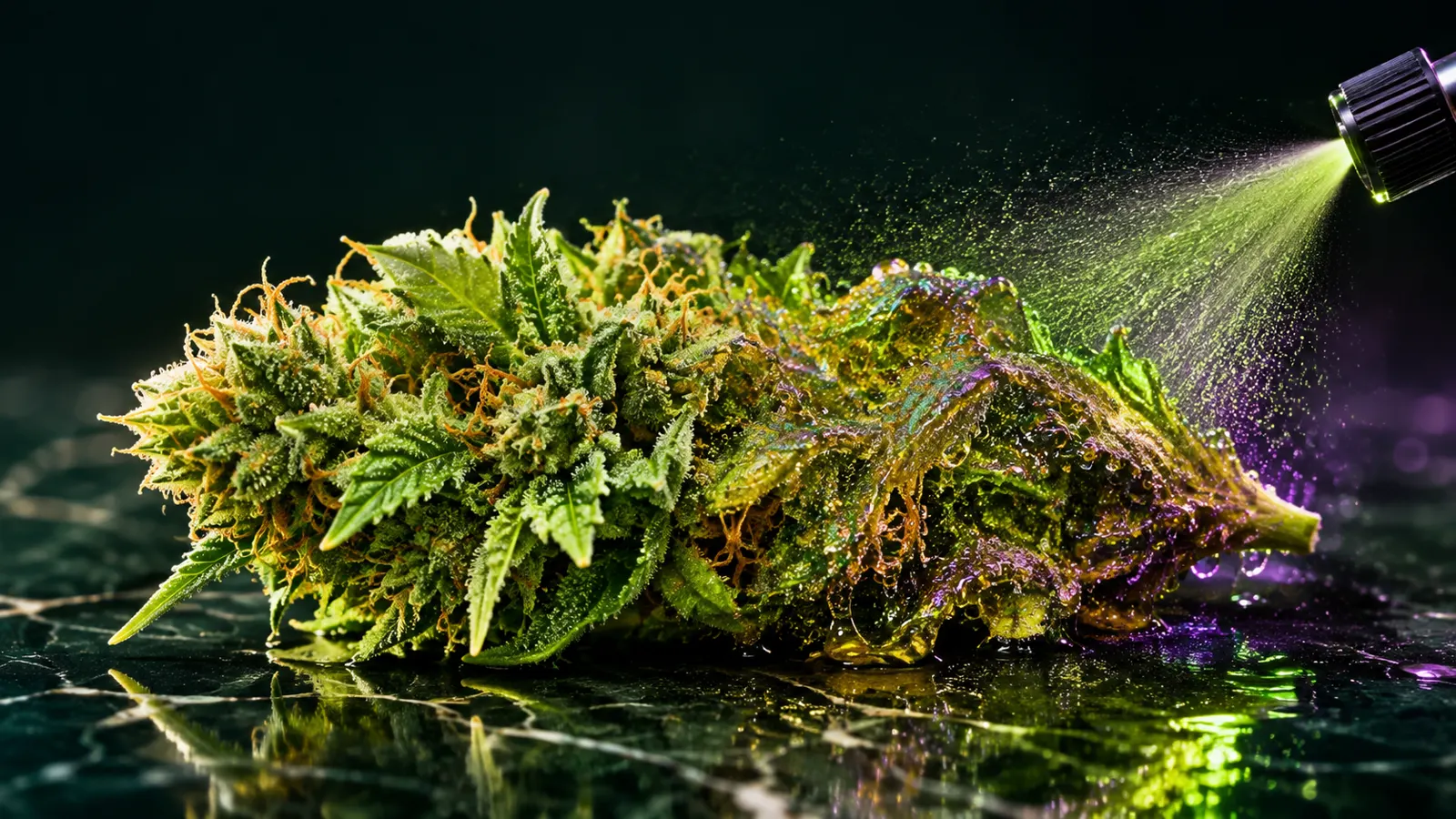
Some of the scariest stories about “weed” — seizures, poisonings, violent episodes, deaths — are actually about chemicals. Cheap hemp with almost no THC (industrial hemp or CBD flowers) is sprayed with synthetic cannabinoids — chemicals of unknown origin and composition — and sold as ordinary marijuana. The buyer doesn’t know.
NaturalWith syntheticsIllustration
⚠ The main deception
The person thinks they are smoking weed. The doctor thinks they smoked weed. But it was chemicals.
2 to 100 times stronger than THCSynthetic cannabinoids act on the receptors at full force — natural THC cannot do that.
Faster and harder dependenceAddiction sets in faster and withdrawal is harder than with strong natural weed: insomnia, irritability, palpitations, and in some — panic, psychosis, seizures. Almost half of those who sought detox needed hospitalisation.
Tests don’t detect itA standard hospital urine test looks for THC — it does not show synthetic cannabinoids. Such a case may be recorded as “cannabis” — or the cause may remain unknown. That is how chemicals ruin the plant’s reputation.
When there is tested legal weed with its contents on the package, the fake loses its buyers. As long as there is no legal choice, people take what they are given on the street.
Growing real weed illegally is slow, expensive and dangerous. Spraying cheap industrial hemp with chemicals is fast and hugely profitable.
Natural weed · illegal
3–4 months of growing, then another 2–4 weeks of drying
Light, electricity, ventilation, fertilisers
Risk of a criminal case at every stage
€1,000–2,000cost per kilogram
Fake with chemicals
Industrial hemp with almost no THC — grows legally in a field
Sprayed with synthetic cannabinoids — in a single day
Sold as ordinary weed. The buyer doesn’t know
≈€100per kilogram of raw material
The raw material is 10–20 times cheaper — profit of up to 1000%. That is why the whole world is flooded with chemicals. Legal tested weed breaks this scheme: the fake loses its buyers.
Prices are an Eko kurss market estimate. That fakes are made from industrial hemp and CBD flowers is confirmed by the EU drugs agency — links below.
The EU confirms itThe EU drugs agency warns: some of what is sold on the black market as cannabis may be adulterated with potent synthetic cannabinoids. Of particular concern are low-THC hemp and CBD products treated with synthetics. EUDA, 2024 · EUDA, 2026
It exists in LatviaLatvian police: in half a year — 18 criminal cases where synthetic cannabinoids were found on seized marijuana; some of this “weed” arrives in parcels from abroad. It is not an avalanche yet, but the trend is there. Child psychiatrists in Riga are sounding the alarm about the rise of synthetics among teenagers. MediaLSM, 2024 · LSM, 2025
Synthetics are not cannabisSynthetic cannabinoids hit the same brain receptors, but far more strongly than THC, and they contain no CBD, which softens the effect of natural weed. A review of ~4,000 cases: heart attacks, strokes, seizures, kidney damage, acute psychoses and at least 26 deaths. Tait et al., Clinical Toxicology, 2016 · van Amsterdam et al., J Psychopharmacol, 2015
The deaths come from chemicalsNo deaths from poisoning with natural cannabis have been recorded. From synthetic cannabinoids — yes, toxicity was the direct cause of death in many cases. The EU detected 209 different synthetic cannabinoids between 2008 and 2020. Alcohol and Drug Foundation (Australia) · EUDA, 2021
Not only synthetics: what else is found in black-market weed
An illegal producer thinks about weight and profit, not about the buyer’s health. When laboratories test illegal weed, they find things that should not be there.
PesticidesSettle on the budsIllustration
PesticidesHealth Canada compared 50 legal and 50 illegal samples. The most common pesticides in the illegal ones were myclobutanil and paclobutrazol. When heated and smoked, myclobutanil releases hydrogen cyanide — a highly toxic gas. Health Canada · CBS News
Growth regulatorsPaclobutrazol makes buds denser and heavier — so they cost more per gram. In California it is on the list of pesticides that must never be used on cannabis. PBS SoCal
Metals and mouldHeavy metals and microbial contamination are found far more often in illegal samples. In British Columbia, arsenic and lead in some samples exceeded the limits 2–3 times. Health Canada · NCCEH (BC)
Lead for weightIn 2007 near Leipzig, weed was bulked up with lead particles for profit. The university hospital alone treated 35 people for lead poisoning; in total, doctors estimate several hundred were affected. Busse et al., 2008 · NEJM, 2008
Every lot goes to a labIllustration
Even natural weed without synthetics is no guarantee. If it is grown without rules, harmful substances get into it too. Cannabis strongly absorbs heavy metals from the soil — that is why it is used to clean land. Cheap phosphate fertilisers can contain cadmium: the EU even sets a limit for them — 60 mg per kg. Add pesticides against pests. The nitrogen, phosphorus and potassium salts themselves are not considered harmful in buds: according to research, flushing with water before harvest barely changes their content. The danger is the dirt — in fertilisers, soil and pesticides. Only a legal market can protect people: in Canada every lot of legal cannabis is tested by an independent laboratory — for pesticides, mould, microbes and heavy metals. On the black market nobody tests the weed. EU 2019/1009 · McMaster, 2021 · HortScience, 2025 · University of Guelph, 2017
How these chemicals appeared — and why bans made them worse
The 1990s. Scientists had just discovered cannabinoid receptors. Chemist John Huffman of Clemson University (USA) synthesised hundreds of new molecules to understand how the receptor works — for future medicines. He published the formulas in scientific journals.
2008. German chemists found his 18th substance — JWH-018 — in “Spice” smoking blends sold as “incense”. Hence the popular name.
Right after the ban. Four weeks after Germany banned JWH-018, manufacturers slightly changed the molecule and kept selling. That is how the “cat and mouse” game began: one substance is banned — manufacturers already have a replacement ready.
Today. The EU agency alone tracks 254 different synthetic cannabinoids. Almost no one has studied each new generation — neither in humans nor in animals. People don’t know what exactly they are smoking or how strong it is.
To be honest: even the first JWH-018 was not harmless — unlike THC, it acts on the receptor at full force, and there were cases of seizures. But each new generation is even less predictable. This is a direct consequence of a situation where the natural plant is banned but demand remains.
To be honest about the line: dependence and psychosis risk from strong natural THC are also real and proven (see the dark side). But the most frightening things — poisonings, seizures, deaths — are most often synthetics posing as weed.
That is why we support legalisation. While weed is banned, no one checks what is in it. In a legal system there is a pharmacy or licensed outlet, lab testing, THC and CBD on the package. Selling chemicals disguised as weed becomes much harder.
Not only “what”, but also “how”
Illustration
Most of the harm to the lungs comes from smoke, not from the plant itself. The method of use changes the risk many times over. This is harm-reduction information, not encouragement: cannabis is banned in Latvia today.
risk to lungs: high
Smoking (joint, pipe, bong)
Burning produces tar and carbon monoxide — hence coughing and bronchitis. With tobacco it is doubly worse: nicotine and dependence on it are added to the risks. Deep inhalation and holding the breath increase the harm but barely increase the effect. Tashkin, 2013 · LRCUG, Am J Public Health, 2017
risk to lungs: lower
Vaporising (dry-herb vaporiser)
The herb is heated without burning — the cannabinoids come out as vapour, without smoke. People who switched to a vaporiser report fewer breathing problems, and the more someone uses, the more noticeable the effect. Caution: black-market vape cartridges are a common source of synthetics. Earleywine, Barnwell, Harm Reduct J, 2007 · EUDA, 2026
risk to lungs: none
Oils, drops, capsules
This is how medical products are made: precise dosing, known composition, no smoke. This is exactly how cannabinoids are tested in clinical trials. EUDA, 2018
lungs are safe, but…
Edibles (baked goods, sweets)
The lungs don’t suffer — but the effect starts slowly, and people “take more” before it kicks in. In Colorado edibles accounted for almost 11% of cannabis-related emergency visits — with only 0.3% of sales. The main rule: don’t rush and keep them away from children. Monte et al., Ann Intern Med, 2019
not intoxicating
The fresh plant
In the raw plant THC is in an inactive form (THC acid) and does not cause intoxication — it is “switched on” only by heating. Fresh leaves are added to juices and salads, but there are almost no scientific data yet on the benefits of this use.
10 rules for reducing risk — from the Canadian guidelines
They were drawn up by addiction scientists and endorsed by Canada’s health authorities — like “low-risk drinking guidelines” for alcohol.
Not using is the surest way to avoid risk
Don’t start young — the later, the better
Choose products with less THC and a higher share of CBD
Never use synthetic cannabinoids
Don’t smoke — choose methods without burning
If you smoke — no deep inhaling or breath-holding, no tobacco
Limit frequency: once a week and every day are a huge difference
Don’t drive
Abstain during pregnancy and if there is psychosis in yourself or your family
Don’t combine risk factors — for example, an early start and daily heavy use
These rules only work where the composition is known. In a legal system THC and CBD are printed on the package. On the street they are not — and instead of weed you may get chemicals.
The scales: cannabis versus the legal ones
Illustration
British experts rated 20 substances on 16 kinds of harm — to the user and to society. This is an expert assessment, not a clinical trial.
Alcohol
72
Heroin
55
Crack cocaine
54
Methamphetamine
33
Cocaine
27
Tobacco
26
Cannabis
20
Benzodiazepines
15
Methadone ⚠
14
Subutex ⚠
7
⚠ Methadone and Subutex are NOT safer than weed
Their score is low because the experts treated them as medicines dispensed by a doctor: no street market, thefts or crime — hence little “harm to society”. Cannabis was rated as illegal, with all the harm of the black market.
Methadone, Subutexpeople die of overdose, especially combined with alcoholwithdrawal 2–4 weeks, tail up to six monthsstrong dependence
Cannabispeople practically don’t die of overdosewithdrawal 1–2 weeks, not fataldependence in 9 out of 100
Methadone and Subutex save the lives of people with heroin addiction — but only as treatment under a doctor’s control. Taking them on your own is dangerous.
2015 · Europe40 experts from all EU countries rated 20 substances using the same method. The most harmful — alcohol (72), then heroin and crack. The European ratings matched the British ones.van Amsterdam et al., J Psychopharmacol, 2015
2019 · Australia25 experts, 22 substances. Taking into account how many people use what, alcohol is again in first place, followed by cigarettes, methamphetamine, and only then cannabis.Bonomo et al., J Psychopharmacol, 2019
2025 · USAThe most recent study. The most harmful: fentanyl (90), methamphetamine (84), crack (83), heroin (82). Cannabis — 32, in the middle. Mushrooms — 3, the safest. The experts write: US laws are barely related to the real harm of substances.Broman et al., Harm Reduction Journal, 2025
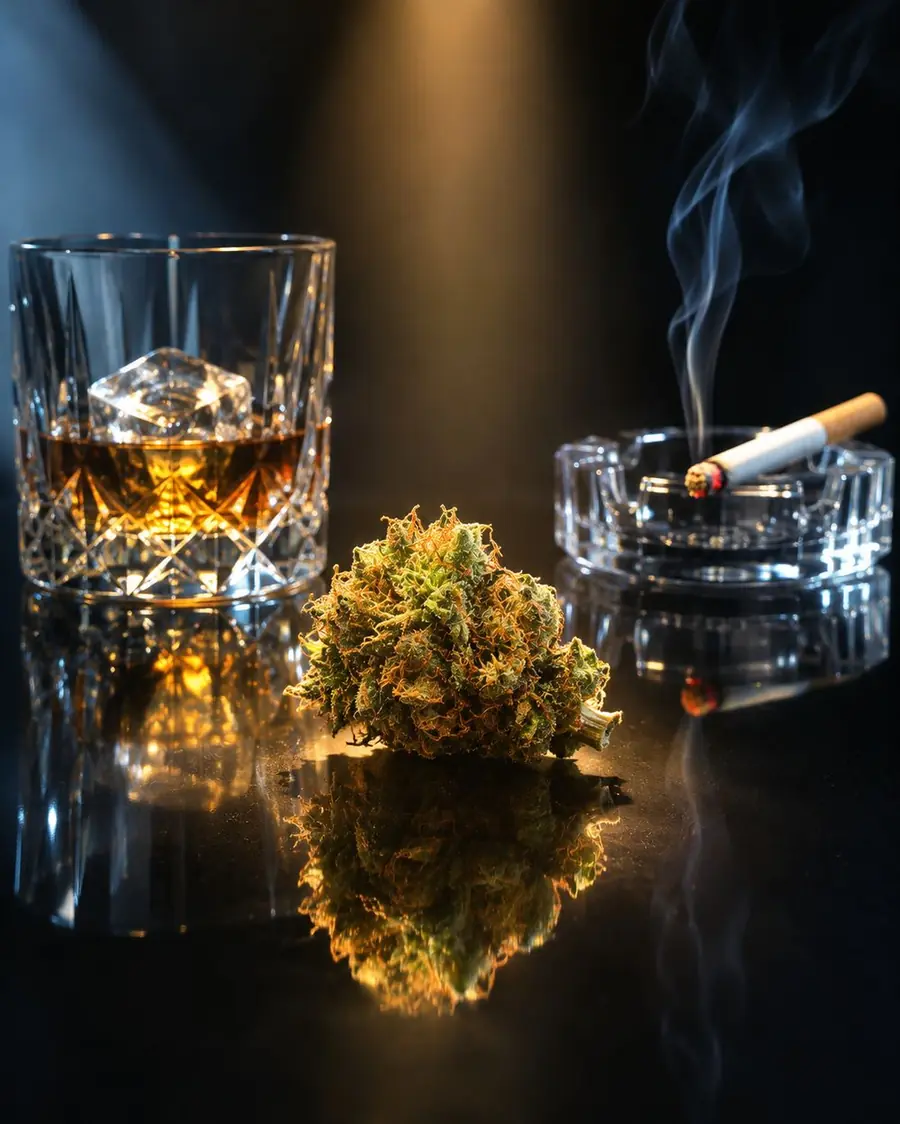
One person — three paths
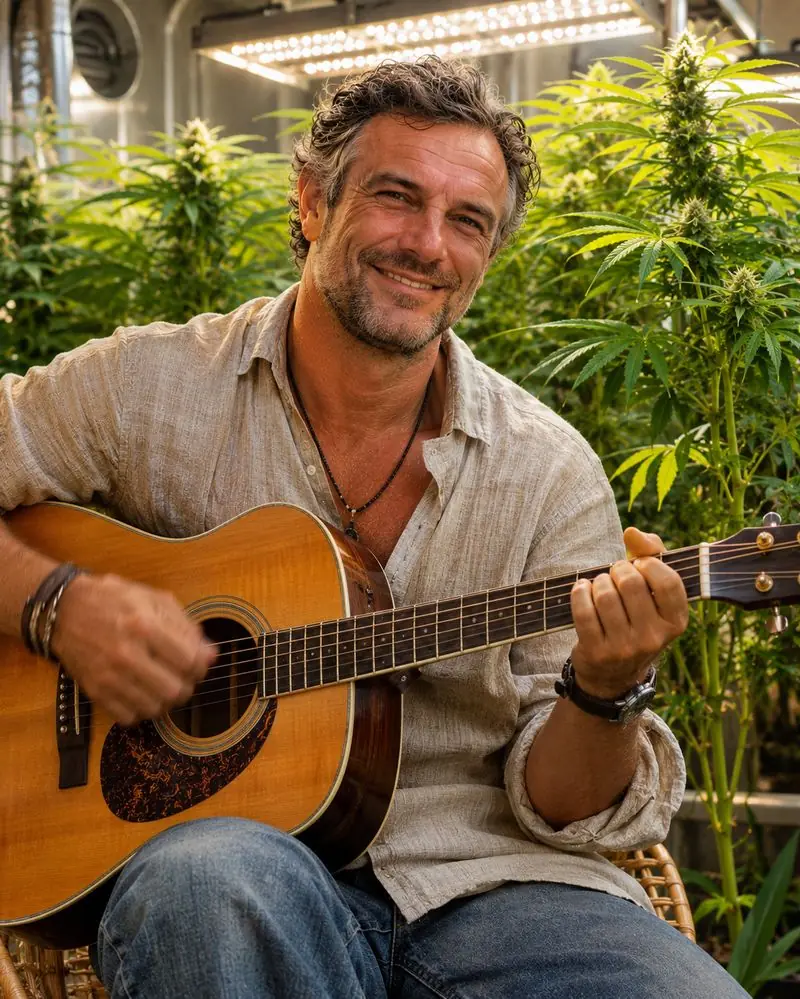
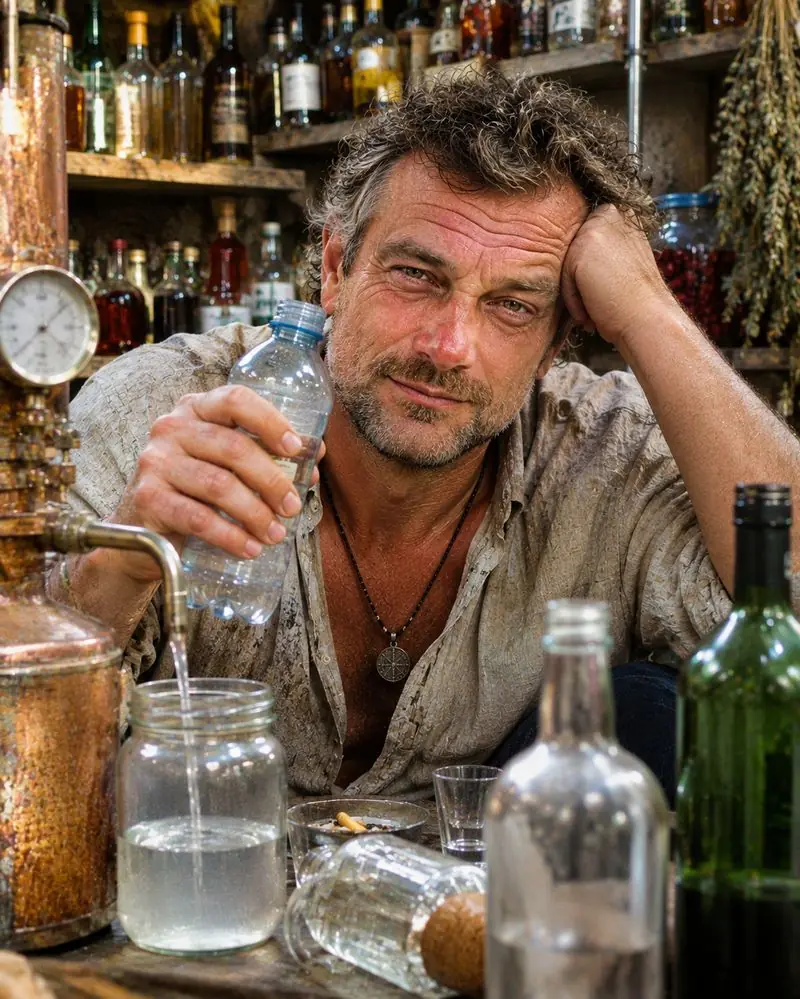
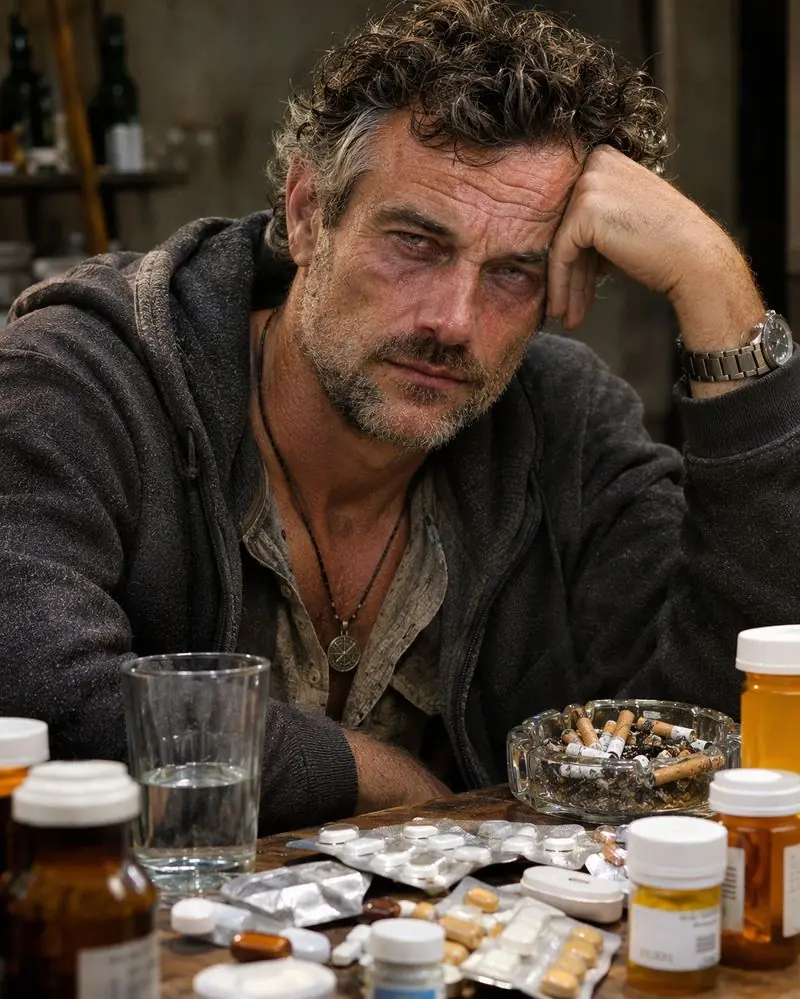
A reconstruction based on factual data: what happens to a person over many years of use. The same man, aged 52.
Cannabis
harm score 20
overdoses — practically none
dependence — 9 out of 100
withdrawal — 1–2 weeks, not fatal
Alcohol
harm score 72
deaths worldwide — 2.6 million a year
dependence — 23 out of 100
delirium tremens — can kill
Tobacco and painkillers
tobacco: deaths — 7+ million a year, dependence — 68 out of 100
opioid painkillers: overdoses — 125,000 a year
withdrawal — weeks, tail — months
A reconstruction based on factual data. Sources for the numbers are below in this section and in the “Withdrawal” table. We do not encourage using any of these.
Substance
Dependence among users
Deaths worldwide per year
Tobacco
68 out of 100
over 7 million, of which ≈1.6 million from second-hand smoke
Alcohol
23 out of 100
2.6 million
Cocaine
21 out of 100
0.6 million from all drugs combined; most — opioids
Opioids (heroin, oxycodone, etc.)
high
Cannabis
9 out of 100
a fatal overdose from cannabis alone has practically never been described
synthetic opioids, medicines for treating heroin addiction
a plant
Harm on The Lancet scale
14 / 7 — because they are dispensed under a doctor’s control
20 — rated as illegal
Fatal overdose
possible, especially with alcohol and sedatives
practically never described
Withdrawal
severe opioid withdrawal — 2–4 weeks, tail up to six months
irritability, poor sleep — 1–2 weeks, not fatal
In Latvia
buprenorphine — the 5th most seized drug on the black market
no medical programme
To be honest: for people with heroin addiction methadone and buprenorphine save lives — in treatment mortality is about three times lower. Cannabis does not replace them. But in terms of fatal overdose risk cannabis is far safer: people practically don’t die from it.
We compare safety — not treatment strength. Cannabis does not replace antidepressants for depression: there is no evidence for that. But here is what happens with withdrawal and overdose:
Withdrawal after long-term use
Fatal overdose
Antidepressants
withdrawal symptoms — in 1 in 6–7 people due to the medicine itself, severe — in 1 in 35
depends on the drug
Opioid painkillers (oxycodone, morphine)
severe withdrawal
yes — the main cause of drug deaths worldwide
Methadone, Subutex
severe opioid withdrawal — 2–4 weeks, tail up to six months
yes, especially with alcohol and sedatives
Cannabis
irritability, poor sleep, appetite — 1–2 weeks, not fatal
When a person quits after long daily use. Timelines are from clinical guidelines and reviews. The key difference is not only how long it lasts, but how hard it is: with opioids and alcohol the whole body suffers, with weed it does not.
SubstanceOnsetWorstAcute withdrawalTail
Methadonelegal, on prescriptionafter 1–3 daysdays 4–72–4 weeks, sometimes longerup to six months: insomnia, low mood, cravingVery severeThe whole body aches: pain in bones and muscles, sweating, chills and goosebumps, diarrhoea, vomiting, leg cramps, sleepless nights. It lasts longer than with heroin. Many can’t bear it and relapse.
Subutexlegal, on prescriptionafter 1–2 daysdays 3–510–20 daysmonthsSevereThe same body aches, sweating, chills, insomnia, anxiety, but milder and longer than with methadone. Hard to quit without a doctor’s help.
Heroinafter 8–24 hoursdays 1–34–10 daysup to six monthsVery severeThe first days the body is “wrung out”: bone pain, chills and fever, vomiting, diarrhoea, tears and runny nose, insomnia, panic. Then months of low mood and craving.
Alcohollegalafter 6–24 hoursdays 1–3up to a week; delirium tremens 2–5 days — can killmonthsLife-threateningShaking hands, sweating, nausea, anxiety, insomnia. In severe cases — seizures, hallucinations and delirium tremens, which can be fatal. Stopping after a binge often needs medical supervision.
Tobaccolegalafter 2–3 hoursfirst week2–4 weekscraving — months and yearsModerateThe body doesn’t ache, but the person is irritable, nervous, can’t concentrate and is hungry all the time. The urge to smoke remains for months and years — that is why it is so hard to quit.
Cannabisbannedafter 1–2 daysdays 2–61–2 weeks, in heavy users up to 3sleep — up to a month. Not fatalMildThe body doesn’t ache. A few days of irritability, poor sleep, vivid dreams, less appetite. Not dangerous; nobody ends up in hospital with it. It passes on its own and, for most people, without a trace.
Do the numbers scare you? What matters is how often and what exactly
Once a month and every day for ten years are different risks. One glass and a bottle a day are too. Here is what science knows about many years of daily use.
Alcohol every day, for years
Cause of more than 200 diseases and injuries: liver cirrhosis, pancreatitis, heart disease
Causes cancer — at least 7 types, including breast and bowel cancer
A New Zealand study followed 1,037 people from birth to age 38: 20 years of cannabis smoking were linked only to gum disease. Lungs, inflammation, metabolism — the same as non-smokers. Tobacco smokers over the same period — worse on everything
Dependence — in about 9 out of 100
Psychosis risk — with daily strong THC
Daily use is linked to a higher risk of heart attack (by 25%) and stroke (by 42%) — from a survey, causation not proven
The key point: the risk of cannabis grows with frequency and potency. Occasionally and moderately — the risk is small. Every day and very strong THC — the risk is higher. Alcohol and tobacco are dangerous even with “normal” daily use.
The verdict of the scales. In overall harm alcohol is 3.6 times worse than cannabis, and tobacco kills millions. Cannabis is banned, while they are sold in every shop.
A gateway to drugs or a way out?
Illustration
The two loudest claims. We check both.
The “gateway” — not proven
Yes, many users of hard drugs started with weed. But before that there were usually alcohol and cigarettes. A US Department of Justice review (23 studies): a causal link “weed leads to hard drugs” cannot be claimed. Models show that a general tendency toward risk explains this picture without any “gateway”.
Pain patients often say themselves that they replaced opioid pills with weed. In 2014 fewer opioid deaths were found in US states with medical cannabis; in 2019, with new data, the link disappeared. Meta-analyses of people in treatment for opioid addiction did not find that cannabis helps them quit.
Our conclusion: the “gateway” scare story is not confirmed by science. The hope for a “way out” is not yet confirmed either. Trials are needed, and they cannot be carried out while the plant is banned.
How the world does it
Illustration
On prescription
Israel
A medical cannabis agency under the Ministry of Health since 2011. Since April 2024 doctors write prescriptions and patients get cannabis at the pharmacy.
Since 1 April 2024 adults may possess and grow for themselves, and clubs operate. Medical cannabis is prescribed on an ordinary prescription. Assessment after 2 years: no sharp rise in use, but more hospital admissions.
Since 2001 possessing a small amount of any drug is not a crime but grounds for a commission and treatment. The burden on courts and prisons fell; use did not explode.
In 2024, 4.8 million Americans had opioid use disorder. 2.6% of the population over 12 misused prescription painkillers. Many started with pills prescribed by a doctor — legally.
On 18 April 2026 President Trump signed an order to speed up research into and approval of psychedelics — psilocybin, ibogaine and others — for treating severe mental disorders. At least $50 million has been allocated. This is not yet legalisation of mushrooms, but the first such step at the national level.
Most EU countries already allow medical cannabis or medicines made from it in one form or another. Latvia is among the few without a programme.
Model
Countries
Legal for adults
Uruguay (2013), Canada (2018), Malta (2021: home and clubs), Luxembourg (2023: home), Germany (2024: home and clubs), Czechia (from 1 January 2026: possession and home growing), South Africa (personal use), USA — 24 states and the capital (2026 data)
On a doctor’s prescription
EU: Germany, Italy, Netherlands, Czechia, Poland, Portugal, Denmark, Finland, Ireland, Greece, Croatia, Lithuania, Luxembourg, Malta, Cyprus, Spain. Europe outside the EU: United Kingdom, Norway, Switzerland, North Macedonia, Ukraine. World: Israel, Canada, Australia, New Zealand, Argentina, Brazil, Colombia, Chile, Peru, Mexico, Thailand; in the USA — 40 states
No criminal penalty for small amounts
Portugal, Spain (in private), Netherlands (coffee shops since 1976 under a tolerance policy), Czechia, Belgium, Estonia, Switzerland, Georgia, Jamaica, Colombia
Latvia
No medical cannabis programme. A small amount — a fine, more — a criminal case
In a 2026 Pew survey, 88% of Americans think cannabis should be legal: 55% for any adult, another 33% for medicine. Against — 11%. Pew Research Center, 2026
What hemp gives the world
Illustration
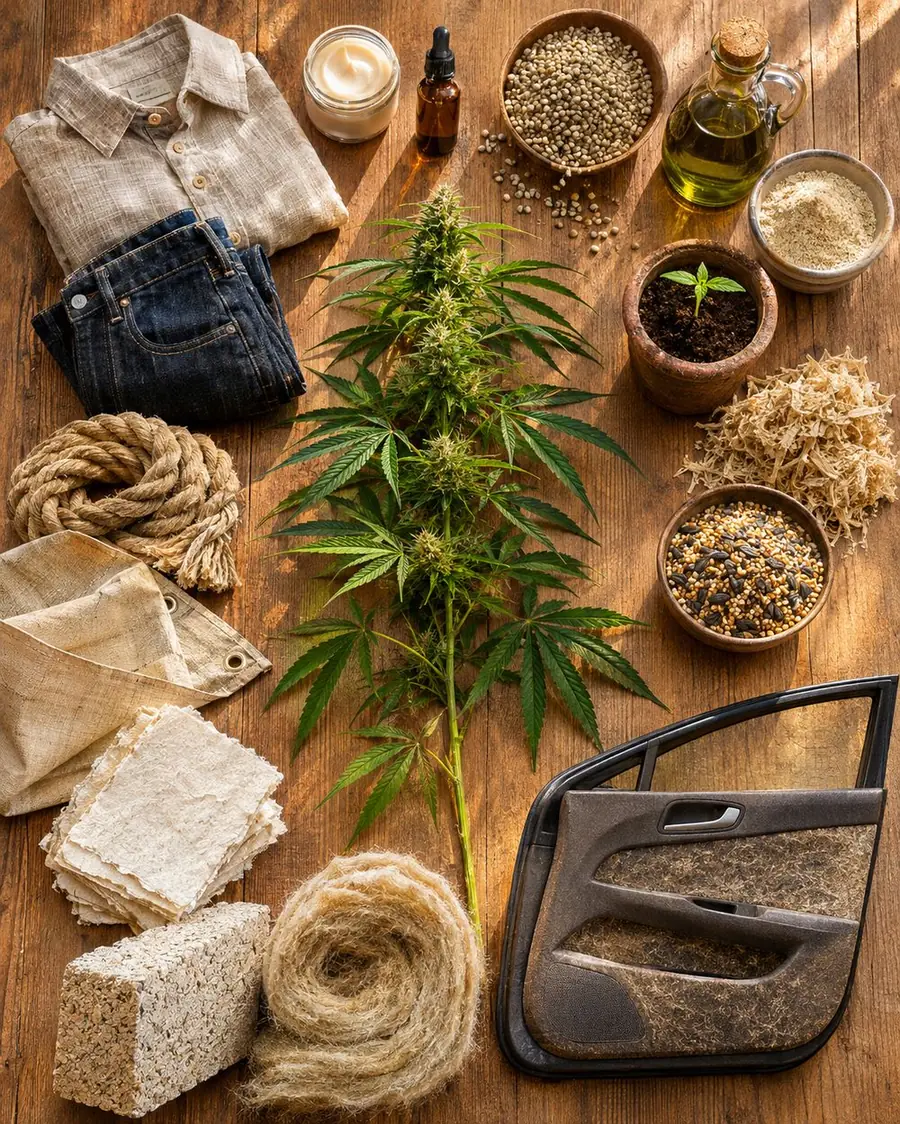
The bud is only a small part of the plant. Industrial hemp with almost no THC grows legally in the EU, including in Latvia.
Stalk: fibre
Fabrics, clothing, denim, shoes
Ropes, ship rigging and sails (the word “canvas” comes from cannabis)
Fishing nets, sacking
Paper and cardboard
Insulation (hemp wool), boards
Composites and bioplastics: car parts
Stalk: hurds (the woody part)
Hempcrete — “hemp concrete” for walls
Building blocks and plaster
Bedding for horses, chickens, rabbits
Garden mulch
Seeds
Food: seeds, oil (omega-3 and 6), protein, flour
Kaņepju sviests — a Latvian tradition
Feed for birds, fish and livestock
Oil for cosmetics, soap, creams
Flowers and leaves
Cannabinoid-based medicines
CBD oils and drops
Tea and herbal blends from industrial hemp
Land and climate
Absorbs 9–15 t of CO₂ per hectare in 5 months
Just 3 weeks after sprouting it fully covers the soil — protecting it from erosion
Grows almost without chemicals; almost no waste in processing
Hemp seeds are a superfood. More than 30% oil and about 25% protein, plus fibre, vitamins and minerals. The protein is easily digested. More than 80% of the oil is healthy unsaturated fat, and the omega-6 to omega-3 ratio is 2:1 to 3:1, considered optimal for humans. Hemp oil once rivalled linseed oil — in food, lamps and paints. Today — in salads, bread, protein, bird feed, soap and creams. Callaway, Euphytica, 2004 · Callaway, AOCS, 2010
Hemp and forest. “A hectare of hemp replaces a hectare of forest” is an exaggeration. According to the European Commission, a hectare of hemp absorbs 9–15 t of CO₂ — like a young forest, but in just five months of growth. European Commission: hemp
Today — hemp production in the EU is growing; the European Commission calls it a crop for the “green” economy. European Commission
Hemp heals the land
It grows — and draws poison out of the soil
Heavy metals in the soil
season 123
Heavy metals — it worksHemp roots go deep and take cadmium, lead, zinc and nickel out of the ground. In a 2002 experiment — up to 126 g of cadmium per hectare in one season. The metals accumulate in the leaves, so such hemp is not eaten but used for fibre and building materials. In Taranto (Italy) farmers have been planting hemp since 2011 on land poisoned by a steelworks.[Plants, 2022][Linger, 2002]
Radiation — tried at ChernobylIn 1998 scientists planted hemp near the Chernobyl nuclear plant to draw out radioactive caesium and strontium. To be honest: for radiation the effect turned out to be limited — it is slow, and the hemp itself then has to be disposed of as radioactive waste. Hemp’s real strength is heavy metals.[Chernobyl seminar, 1998]
Latvia now
Illustration
A small amountAn administrative offence: a warning or a fine of up to €280. EUDA, Latvia 2018
More than “small”Criminal liability, up to 3 years in prison. EUCPN
Medical cannabisThere is no programme. Industrial hemp is allowed. The Progressives party proposed allowing medical forms. Media · not verifiedBaltic Times
Latvia
We have the land. We have the climate. We need a clear law.
Results: weighing it up for Latvia
Illustration
Why Latvia needs this now
The budget is short of money. If no new revenue is found, spending will be cut — which means what pensioners, people with disabilities and hospitals live on. This is not our opinion but figures from the state and international organisations:
−€844 millionin spending the Ministry of Finance plans to cut over 2026–2028
≈ −€543 millionthe gap for 2027: −€117.7 million of “fiscal space” plus €425.6 million of decisions already taken with no source of funding
€2.73 billionthe deficit could reach in 2028 (5.4% of GDP) if nothing changes
€901 milliona year in interest on public debt by 2029–2030 (now ~€606 million)
The IMF directly advises Latvia: savings alone will not close the gap, new revenue is also needed.
Everything above goes on one set of scales. Plus we count the money: taxes, police, medicines, tourists. Where there are no exact data, we honestly write “assumption” and let you change the number yourself.
Illustration
On the “benefit” side
Proven to relieve chronic pain, spasms in multiple sclerosis, chemotherapy nausea, severe childhood epilepsy; helps sleep
There are already approved medicines: dronabinol, nabilone, Sativex, Epidiolex
Where medical cannabis was allowed — fewer prescriptions for opioids and other pills
On the road: crash risk ×1.3 versus ×4 for alcohol (0.8‰); in fatal crashes alcohol is almost 40 times more dangerous
Harm 3.6 times lower than alcohol; dependence 2.5 times rarer than with alcohol and 7 times rarer than with nicotine
A fatal overdose has practically never been described
Legalisation for adults did not increase teenage use
Tested composition instead of street weed with chemicals
Taxes for the budget and fewer cases for police and courts
On the “harm” side
Dependence — in about 9 out of 100 (alcohol — 23, tobacco — 68)
Psychosis risk with daily strong THC — reduced by controlling potency and composition
Harmful for teenagers — like alcohol, so 18+ only
In Germany after the reform — +5.6% cannabis-related hospital admissions (there are no legal shops, some weed comes from the black market)
How much Latvia already earns from the “legal evils”
≈ €285 millionexcise on tobacco in 2025
≈ €273 millionexcise on alcohol and beer in 2025
≈ €558 milliontogether — almost as much as the 2027 budget gap
We propose taxing cannabis the same way as vodka and cigarettes. To be honest: the cannabis market is smaller than the alcohol and tobacco markets, so the amount will be smaller — the calculator below shows a realistic estimate. But every euro of tax is a euro the black market takes today.
Calculated from State Revenue Service data: total excise in 2025 — €1.24 billion, of which tobacco — 23%, alcohol with beer — 22%. VID, Akcīzes preču aprite 2025
Calculator: money for Latvia
Move the sliders — anyone can check the numbers. The grey text shows where each default figure comes from.
How many adults smoke weed aged 15–64, official surveys
15%in Latvia have tried it at least oncemen 22%, women 8%
3.9%in Latvia used it in the past yearthat many admitted it
8.4%in the EU used it in the past year24 million people
Realistic8.4% use (EU average), 70% legal, tourists +10%
Money into the economy
Taxes for the budget
Optimistic12% use, 80% legal, tourists +50%, one in three tourists buys
Money into the economy
Taxes for the budget
“Money into the economy” is weed sales plus what new tourists spend in hotels, cafés, restaurants and shops. In reality the effect is even bigger: this money flows on into wages, rent and purchases. Excise — €10 per gram, VAT — 21%. Tap a forecast — the sliders below will adjust to it, and you can check any number.
Residents of Latvia
Tourists
Price and taxes
sold legally per year
money in the country per year: weed market + new tourists’ spending
To be honest: the shop price must not be much higher than the dealer’s, otherwise people will stay on the black market, as happened in Canada in the first years. So excise and producer price have to be set together. The main gain is not only money. It is quality control, an honest conversation with teenagers, and police who deal with serious crime.
USA: $4.4 billion a year
States where cannabis is legal for adults collected more than $4.4 billion in taxes in 2024 — a record. Since 2014 — $24.7 billion. The industry employs about 425,000 full-time workers. Marijuana Policy Project, 2025 · Vangst Jobs Report, 2025
Canada: C$8.3 billion to GDP
The legal industry added more than C$8.3 billion to Canada’s economy in 2024. Legal stores sold C$5.3 billion worth in a year. In the first year legal sales were about 1 billion — the market grew fivefold, pushing out dealers. Statistics Canada (via StratCann) · Statistics Canada: 2024 sales
Germany: forecast of €4.7 billion a year
Calculation by the University of Düsseldorf (DICE): €2.8 billion in taxes, about €0.5 billion in social contributions and €1.4 billion saved on police, courts and prisons. Plus 27,000 jobs. Scaled to Latvia’s population — about €105 million a year, and that with excise of only €4.5 per gram. Haucap, Knoke, DICE 2021 (Pharmazeutische Zeitung)
Taxes: the Colorado example
The state collected $236 million in cannabis taxes and fees in 2025 and more than $3.1 billion since 2014. Colorado has 5.9 million residents, three times more than Latvia. Colorado Department of Revenue
Medicines
In US states with medical cannabis there were fewer prescriptions for medicines it can replace. Savings for the Medicare programme — $165 million in 2013, about 0.5% of its drug spending, if the law had applied nationwide. Bradford, Bradford, Health Affairs, 2016
Tourists
After legalisation, Colorado rented about 51,000 more hotel rooms a month. When sales opened — 120,000 more. But: EU law requires punishing drug trafficking “without authorisation”, so Germany and Malta allowed only clubs for residents. For tourists in Latvia this is closed for now. Meehan et al., J Regional Analysis & Policy, 2020 · EUDA: EU cannabis laws
Hemp tourism: Latvia’s chance
Illustration
Tourists go where there is something unique. Latvia has everything for it: forests, farmsteads, saunas, cuisine with kaņepju sviests and a thousand-year history of hemp.
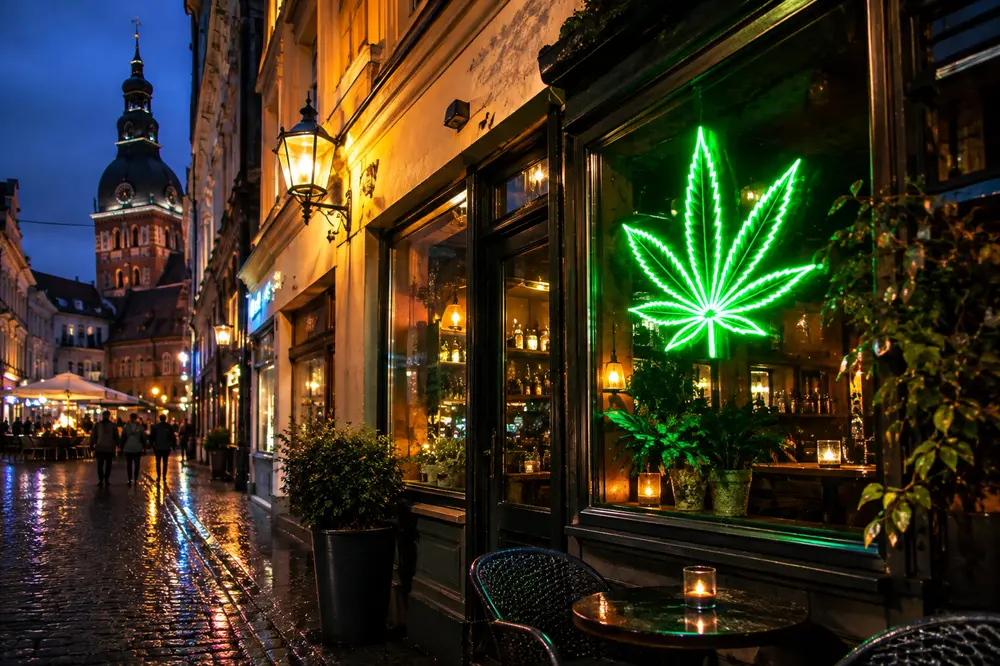
Illustration. CBD shops with windows like this already operate in Old Riga
What experience showsIn Colorado after legalisation hotel revenue rose by 25% a month on average, and in Denver hotels earned about $130 million in extra revenue. Tourist numbers grew when legal sales opened. Virginia Tech, 2025 · Penn State, 2020 · Meehan et al., 2020
What is possible already todayHemp farms and a museum already operate: field tours, the history of processing, tastings of hemp oil and kaņepju sviests. Latvia has the only hemp museum in the Baltics. Adzelviesi farm · Hemp Museum, Obelisk
Our vision
Eco-farmsteads: a hemp field, a sauna with hemp whisks and oils, Latvian cuisine
Our own Latvian varieties — for medicine, fibre, seeds and, when the law allows, for adults
Taking part in international hemp exhibitions — Latvia as a brand of clean northern hemp
A hemp harvest festival — alongside Līgo and the kaņepju sviests tradition
To be honest about timing: EU law does not yet allow selling THC cannabis to tourists — that is why Germany and Malta opened clubs only for residents. But hemp agritourism, museums, food, saunas, exhibitions and our own industrial hemp varieties are allowed right now. We can start tomorrow and be the first ready for Europe’s next step.
Decisions based on data, not on fear.
Eko kurss
The Eko kurss position
Why we are for it
Double standard. Alcohol (72 harm points on The Lancet scale) and tobacco (26) are sold in every shop. Cannabis (20) is a criminal case. Decisions should rest on data, not habit.
Someone who wants it will find it anyway. The ban has not stopped a single user — it has only handed the market to dealers. Better tested cannabis with its contents on the package than chemicals of unknown origin that put people in intensive care.
Money for people. The budget has a gap of more than half a billion euros for 2027 alone. Taxes from a legal market mean money for pensions, benefits and hospitals, not for criminals’ pockets. To be honest: cannabis won’t close the whole gap — but it means real millions every year, plus jobs and lower spending on police and courts.
Fewer drunk drivers. Where medical cannabis was allowed, fewer people died on the roads — researchers link this to some people drinking less. Legal does not mean behind the wheel: the rules are the same as for alcohol.
A clear law. Today CBD flowers are sold openly, but the law has no THC threshold for flowers. Neither the seller nor the police officer knows exactly what is allowed. The law must be clear for everyone.
Tourism and the hemp industry. Where cannabis is legal, tourist numbers rise. Latvia can start with what EU law already allows today — medicine, industrial hemp, processing — and be ready for Europe’s next step.
We want decisions to be made on data, not fear. We propose going step by step, like other EU countries:
Prescription and pharmacy
Medical cannabis on a doctor’s prescription, as in Israel and Germany. Tested composition, known THC.
Decriminalisation
A person with a small amount is not a criminal. Help instead of a criminal record, as in Portugal.
A regulated market
Taxes for Latvia’s budget instead of money for the black market. A tested product instead of a street lottery. The same rules as for alcohol: 18+ only and not behind the wheel.
Everything within the law. We do not encourage use and do not sell cannabis. We stand for honest information and changing the law by lawful means.
Science
What scientists and doctors say
Not activists — academies of sciences, ministries, Harvard professors and neurosurgeons.
US National Academies of Sciences2017 · the main scientific review
They analysed more than 10,000 scientific papers. Conclusion: there is conclusive evidence of benefit for chronic pain in adults, chemotherapy nausea and spasms in multiple sclerosis.
President of the USA18 December 2025 · executive order
Trump signed an order to speed up moving marijuana to Schedule III. In April 2026 medical marijuana under state licences and FDA-approved medicines were moved to Schedule III. A decision on all marijuana has not yet been made.
On the WHO’s recommendation, the UN Commission on Narcotic Drugs removed cannabis from the list of the most dangerous substances — recognising its medical value.
He began studying weed to prove it was harmful — and came to the opposite conclusion. His book “Marihuana Reconsidered” (1971) was published by Harvard University Press.
Under the pseudonym “Mr X” he wrote an essay for Grinspoon’s book: weed, he said, helped him with scientific insights. This was revealed after his death.
Musicians, actors, athletes and presidents have publicly admitted smoking weed. And doctors and scientists have known hemp for thousands of years. The rest, it seems, were simply shy.
Musicians
BM
Bob Marleyreggae legend
Rastafari: for him weed was part of his faith and music
not proven Hemp is often linked with these people and gods, but there is no reliable evidence: Zoroaster, the Buddha, King Solomon, Moses, Pythagoras, Plato, Aristotle, Hippocrates, Apollonius of Tyana, Paracelsus, as well as the Vedic soma (Indra, Agni), Kali, Bhairava and Parvati. We list them only as hypotheses — by the same rules as the rest of the site.
Use in the past does not mean use now. Ancient physicians and scholars studied and described hemp, not necessarily used it. We do not encourage smoking — we show that this can be talked about honestly.
Eko kurss
After a long night dawn always comes.
Eko kurss
Support Eko kurss
Illustration
Even if you don’t smoke — the benefits will reach you too.
€Taxesinto Latvia’s budget, not dealers’ pockets: pensions, benefits, hospitals
Jobsgreenhouses, processing, shops, laboratories — new jobs and wages
Touristswhere cannabis is legal, tourist numbers rise
Safetyless money for crime, tested composition instead of street chemicals
Latvia is going through hard times, and the country has few ways to earn money. Let’s learn from other countries — those where legalisation brought more benefit than harm.
Why are we so afraid of weed? Alcohol and tobacco are more harmful, yet they are sold in every shop. Whoever wants to smoke already smokes, even though it is banned. They just buy from a dealer and don’t know what’s inside — possibly chemicals. And it could be your child or grandchild.
Those who want to smoke will, those who don’t won’t. But let it be honest, tested and 18+ only.
Sign the petition soon
We will submit the petition on the official ManaBalss.lv platform. Share the site now so more people hear about it.
Sources
Information from open sources. Do not self-medicate.
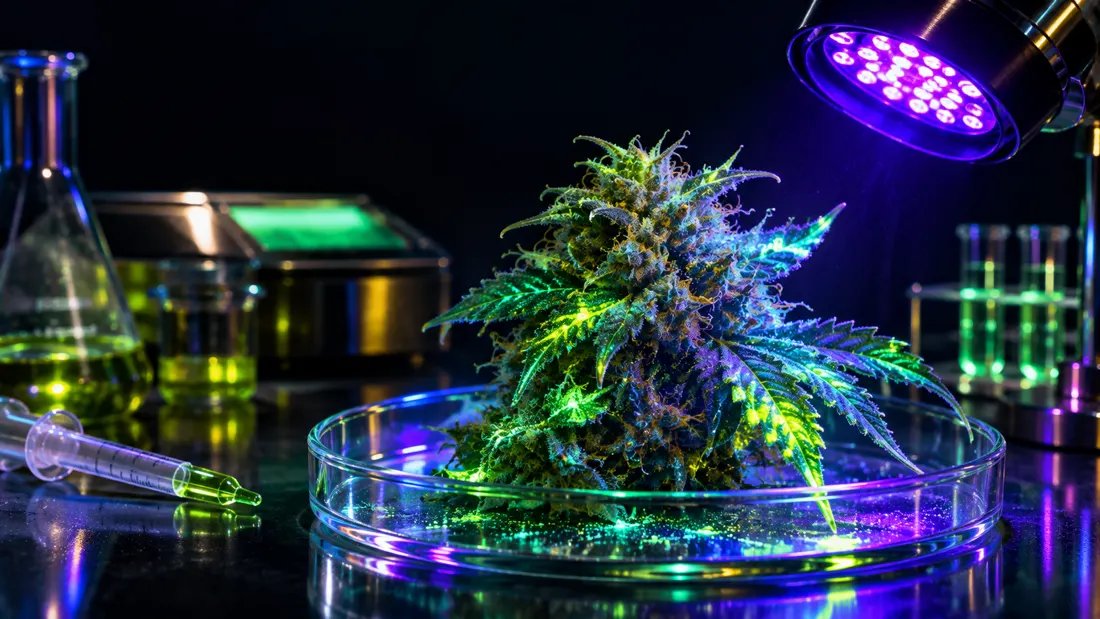 PesticidesHealth Canada compared 50 legal and 50 illegal samples. The most common pesticides in the illegal ones were myclobutanil and paclobutrazol. When heated and smoked, myclobutanil releases hydrogen cyanide — a highly toxic gas.
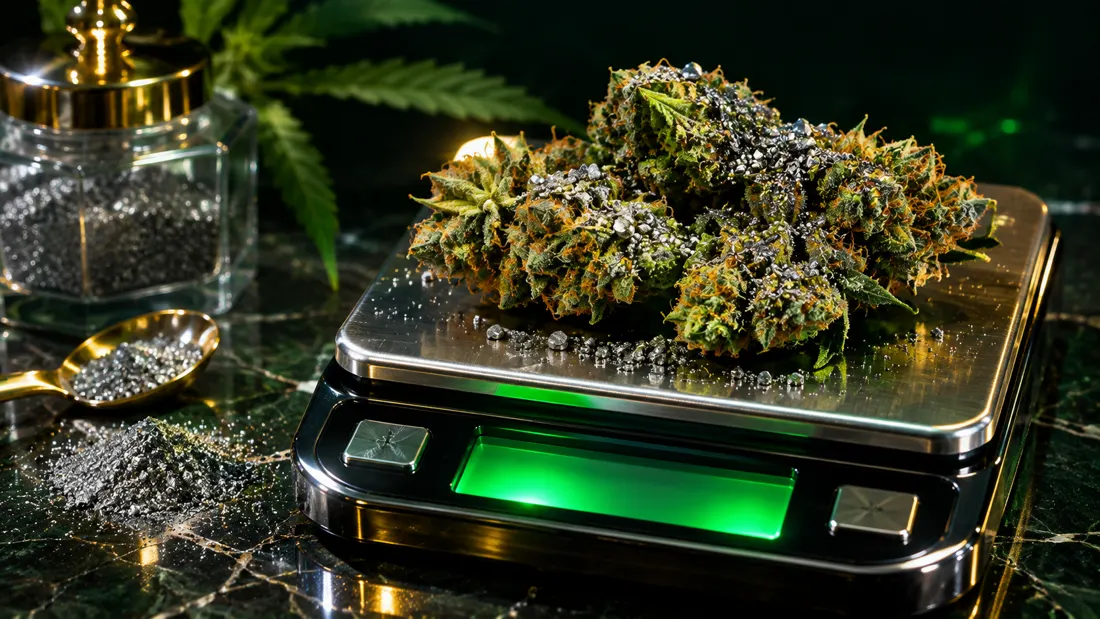 Lead for weightIn 2007 near Leipzig, weed was bulked up with lead particles for profit. The university hospital alone treated 35 people for lead poisoning; in total, doctors estimate several hundred were affected.
 Cannabis
 Alcohol
 Tobacco and painkillers